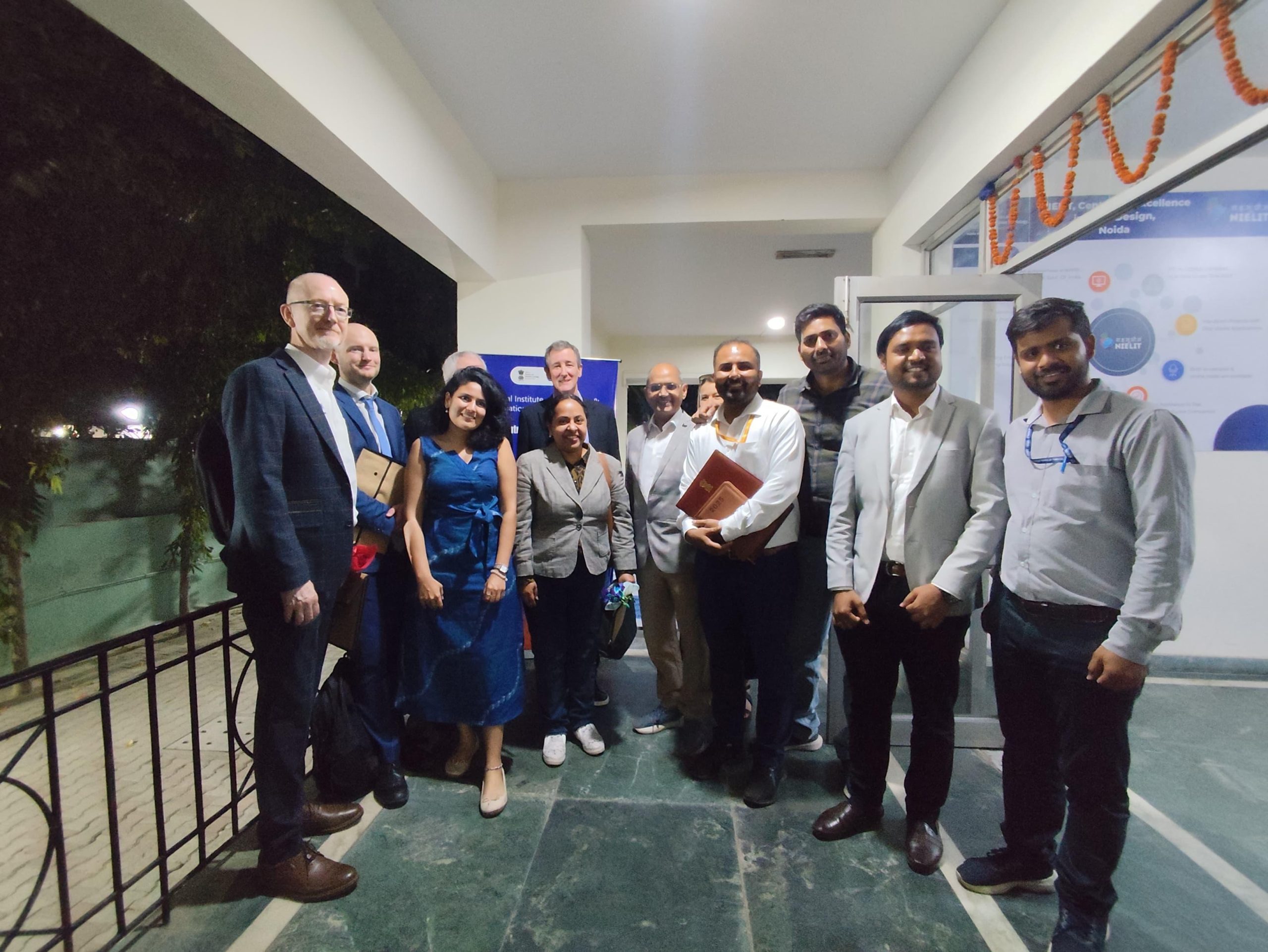
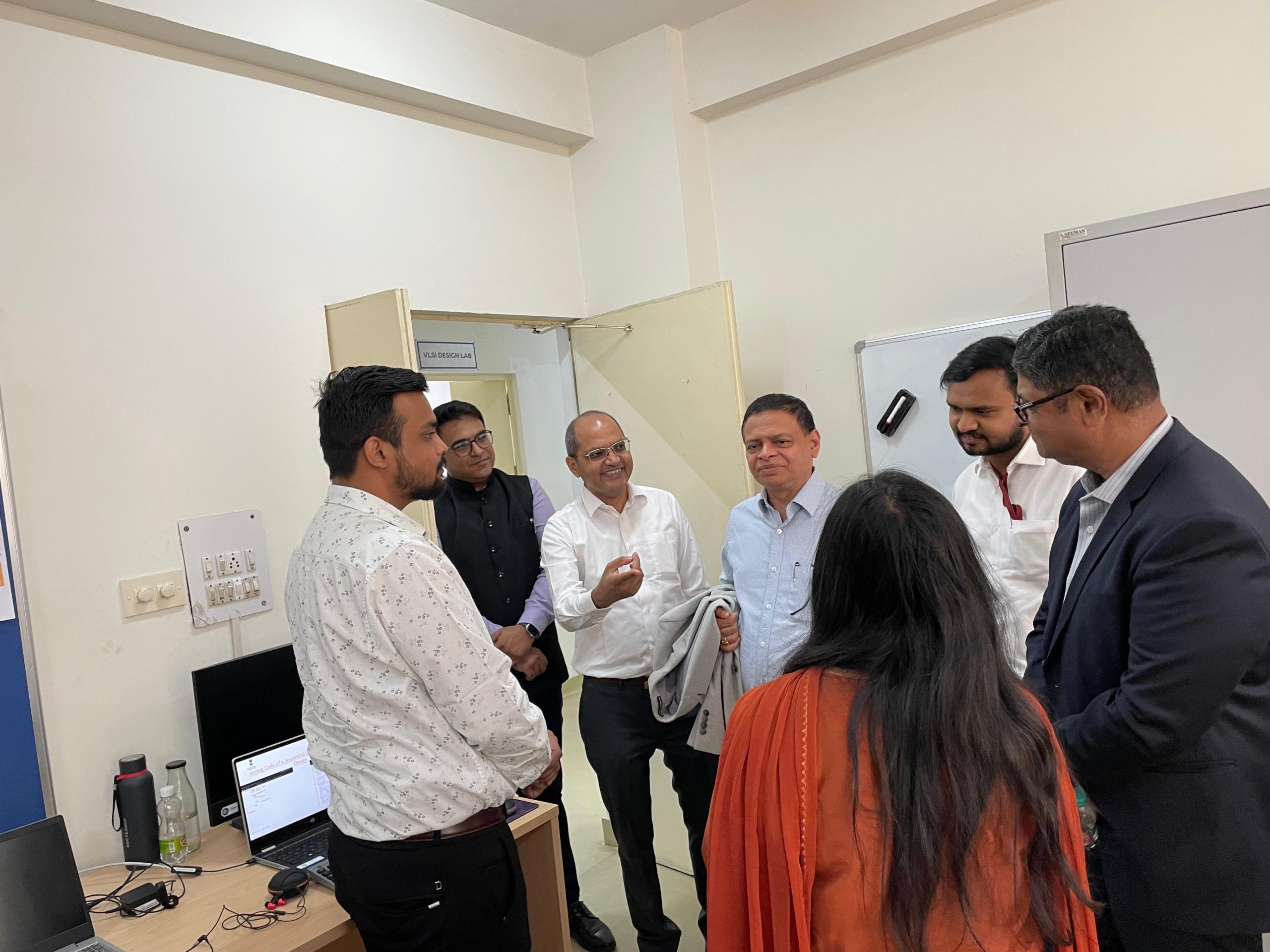
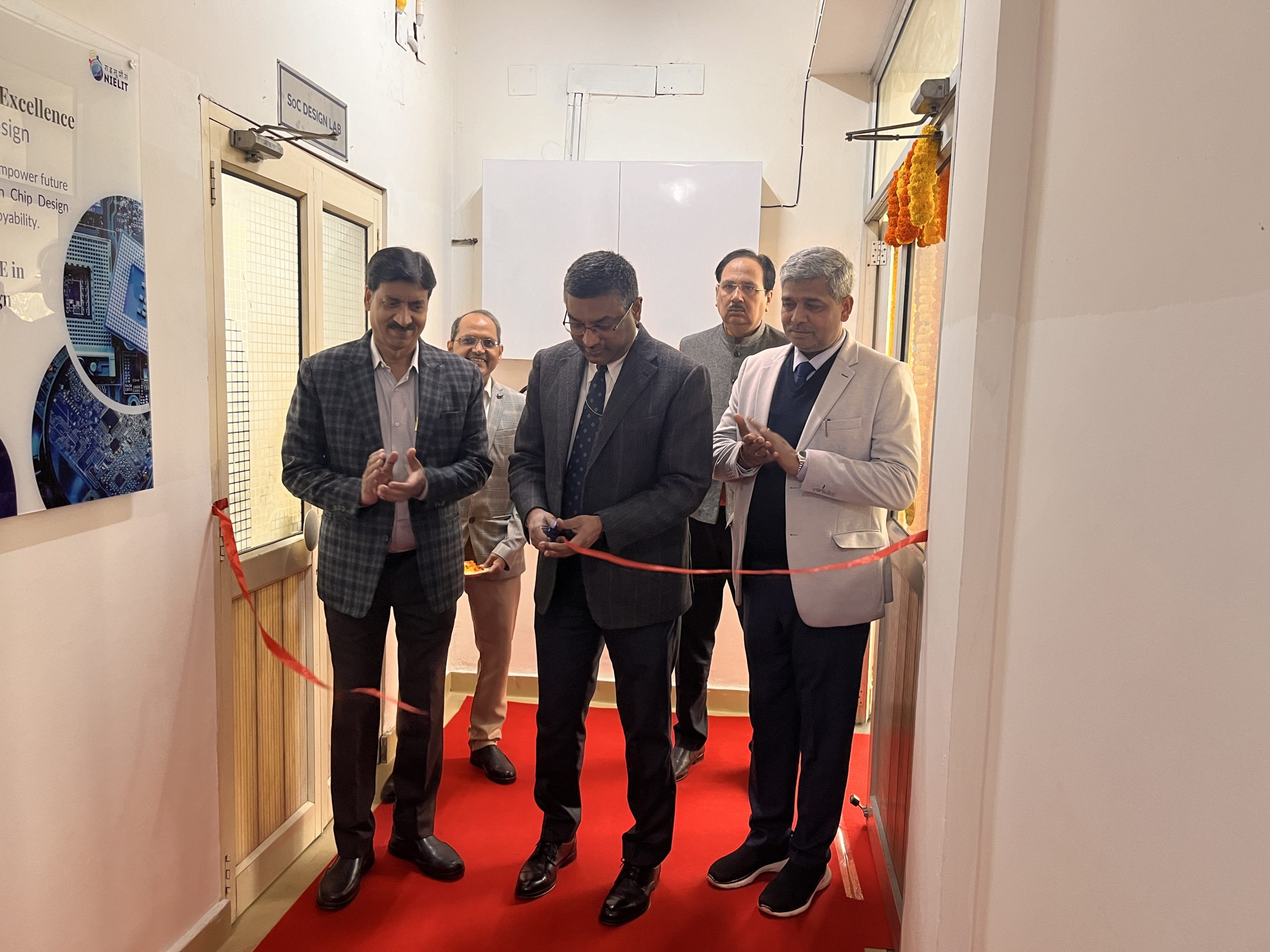
Welcome to Centre of Excellence, Noida
info@coenoida.in
PS-1D, Sector 29, Arun Vihar, Noida, Uttar Pradesh

Centre of Excellence in Chip Design

National Institute of Electronics and Information Technology Noida

Chip Design Associate (O-Level ‘Chip Design’)

The objective of the O-Level Chip Design program is to equip participants with the essential knowledge and practical skills required to excel in Physical Design and FPGA Emulation. The curriculum is designed to align closely with current industry standards, ensuring that learners are well-prepared and highly suitable for roles across the VLSI and semiconductor industry.

 Brochure
 Click me

 Start Date
09-Dec-2025

Duration 
 3 months/450Hrs

Training Mode 
 Online

COURSE OVERVIEW

The Chip Design Associate (O-Level ‘Chip Design’) program offers a comprehensive understanding of VLSI design, emphasizing core concepts such as CMOS fundamentals, digital logic design, Verilog-based coding, FPGA architecture, and timing analysis. It combines theoretical learning with practical, application-oriented training to help learners build strong analytical and problem-solving skills relevant to modern chip design and semiconductor technologies. Along with technical expertise, the program also focuses on developing employability and professional skills, ensuring learners are well-prepared for industry roles in VLSI design, FPGA development, and related electronic system domains.

Course Fees:

Smart Investment, Bright Future
24,500
  • Incl.GST
Popular

O-Level Course in Chip Design (Online Mode):

    • Overview of VLSI design cycle and fundamentals of CMOS Transistor Theory
    • Knowledge of CMOS Inverter Characteristics and Logic Design
    • Understanding the Transistor schematic, Layout and on-chip wire modelling
    • Overview of Delay and Timing analysis
  • Understanding the Design Cycle of VLSI
  • Understanding Verilog programming syntax, Level of Abstraction in Verilog programming,
    and test bench simulation.
  • Design and Develop IPs for VLSI using Verilog
  • Emulate, debug & Characterize reusable IPs
  • To Understand the Static Timing Analysis
  • To understand the ECO fixes and timing closure for the VLSI Circuits
  • To get overview of Field-Programmable Gate Arrays
  • To get knowledge of Hardware Description Language
  • Understanding the FPGA design techniques, verification and debugging
  • Outline the importance of Employability Skills for the current job market and future of
    work.
  • List different learning and employability-related GOI and private portals and their
    usage.
  • Research and prepare a note on different industries, trends, required skills, and the
    available opportunities.
  • Strong understanding of VLSI design concepts, CMOS fundamentals, and digital circuit principles

  • Proficiency in Verilog-based RTL design, simulation, and analysis

  • Ability to perform timing analysis, design optimization, and FPGA implementation

  • Practical exposure to the complete chip design cycle through hands-on projects

  • Readiness for entry-level roles in semiconductor design, FPGA development, and related domains

This comprehensive program integrates conceptual learning with practical experience to prepare participants for successful careers in the evolving field of VLSI and semiconductor technology.


       Eligibility Criteria

      This program is designed to accommodate a wide range of learners and professionals with diverse academic and technical backgrounds.

    • B.Tech / M.Tech – pursuing or completed in relevant fields
    • B.Sc / M.Sc – In Electronics, Computer Science, IT, or related disciplines.
    • Polytechnic Diploma – in Electronics, Computer Science, IT, or allied branches.
    • ITI – in Electronics, Computer Science, or IT disciplines.
    • 12th (PCM) – eligible upon qualifying a Screening Test.
     
        Key Tools Covered in the Program:

 
    • Yosys:
      An open-source logic synthesis tool, Yosys converts RTL (Verilog) designs into gate-level netlists. It supports various FPGA and ASIC flows, enabling flexible and efficient digital circuit synthesis.

    • OpenSTA:
      A powerful open-source static timing analysis (STA) tool, OpenSTA performs accurate timing verification to ensure circuit designs meet setup and hold time constraints for reliable performance.

    • GTKWave:
      A widely used waveform viewer, GTKWave allows designers to visualize and debug simulation outputs, helping in the analysis of signal transitions and timing behavior in digital designs.

    • NGSpice:
      An open-source analog circuit simulator, NGSpice models the electrical behavior of circuits at transistor and system levels, supporting mixed-signal simulation and performance analysis.

    • Magic VLSI:
      A classic open-source VLSI layout tool, Magic provides features for layout editing, design rule checking (DRC), extraction, and visualization, making it ideal for academic and research-oriented chip design.

These tools collectively provide participants with hands-on experience in designing, analyzing, and optimizing ASICs, aligning with
industry standards and practices.

Nikhita
NikhitaStudent
This was my first exposure to chip designing, and I am incredibly grateful to have been guided by an instructor like Manisha Mam. Although transitioning was challenging, this government certification program in VLSI Design Flow offered valuable hands-on experience with industry-standard tools. Despite providing full-day access to Cadence tools, the program was extremely cost-effective, helping me build confidence and gain significant learning.
Sakthivel
SakthivelStudent
I have completed a 2-month internship in the complete RTL to GDSII flow at NIELIT Noida. The training was excellent with good interaction and practical information. As 2nd-year students, we gained exposure starting from basic Linux commands, which I learned in 3 days. Transitioning from being Microsoft users was challenging, but this internship has significantly boosted my expertise and offered me practical knowledge.
Noor
NoorStudent
I have completed an Advanced Synthesis and STA Programme at NIELIT Noida. The training was excellent with good interaction and practical information. We had access to Cadence tools for the entire day, which provided valuable hands-on experience. This training has empowered me with essential skills and a deeper understanding of the field.

Yes, we offer a group discount for students and working professionals from the same university or institute.

The O-Level Course in Chip Design incorporates industry-leading tools and resources to provide practical training in ASIC design workflows.

Yosys: For logic synthesis and RTL-to-gate-level netlist generation.
OpenSTA:
For static timing analysis and timing verification.
GTKWave:
For waveform viewing and signal debugging in digital simulations.
NGSpice:
For analog and mixed-signal circuit simulation and analysis.
Magic VLSI:
For VLSI layout design, editing, and design rule checking (DRC).

Yes, we offer a two-part installment option for the course fees. For more details, please refer to the registration page.


      Course Delivery Model

    • Online mode Training.
    • Hands-on practice through guided labs and assignments.
    • Industry-oriented project exposure.
    • One-to-one Mentorship and doubt-clearing sessions.
    • Focus on applying learned skills through practical projects


      VLSI Tools

    • Yosys Open Synthesis
    • OpenSTA
    • GTKWave
    • NGSpice
    • Magic VLSI

     
        Eligibility

  • B.Tech / M.Tech – pursuing or completed in relevant fields
  • Polytechnic Diploma – in Electronics, Computer Science, IT, or allied branches.
  • ITI – in Electronics, Computer Science, or IT disciplines.
  • 12th (PCM) – eligible upon qualifying a Screening Test


     Payments

    • Pay through Debit card/ Credit card/ Net banking/ UPI.
    • Attractive Discount for Group of 10 Students or more from the same College/Institution/University

                 
      Registration Process

    • Candidates have to apply in the prescribed application form through https://regn.nielitvte.edu.in/in_campus_courses.php.
    • The duly filled form along with the course fees receipt has to be submitted in online mode through the above link. The Fees deposited are Non-Refundable.

    
      Course Cordinator    
                   

    • Mr. Prashant Pal
    • Scientist-‘C’
    • CoE in Chip Design, NIELIT Noida
    • E-mail: prashantpal@nielit.gov.in

Why Choose Chip Design?

Our Chip Design program offers innovative and industry-aligned learning experiences focused on real-world semiconductor design challenges. With an emphasis on quality, scalability, and performance, the program ensures learners are job-ready for the growing VLSI and electronics industry.

Custom Design
High Performance
Advanced Verification
End-to-End Process
Scalable Integration
Cost Efficiency

Join Us: